
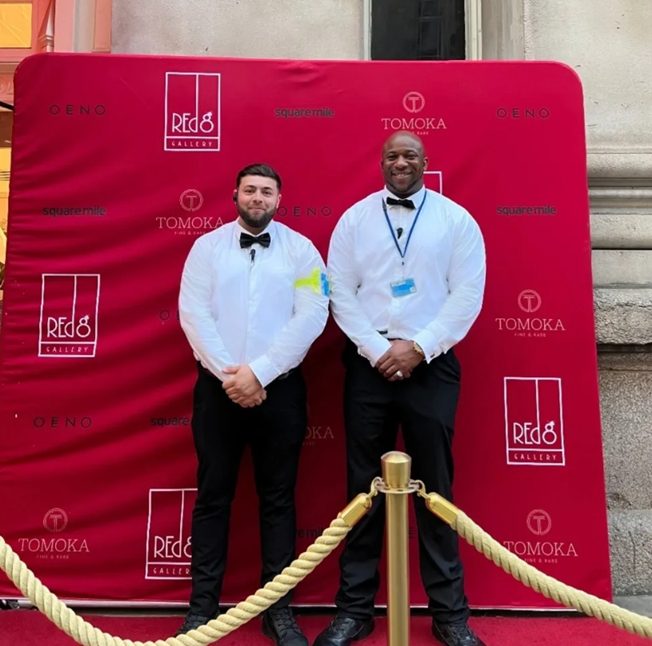
If you picture a close protection officer, you probably picture a tall figure in a black suit with an earpiece, standing behind someone famous, looking serious. That image is not exactly wrong. It is just a very small slice of the job.
The work that actually keeps a principal safe almost never happens in front of a camera. It happens hours, sometimes days, before they arrive at a venue. By the time the suit and the earpiece appear, the most important part is already done.
Who Actually Uses Close Protection
Close protection is not just for film stars and royalty. The clients we see most often include:
- · Touring musicians and artists during UK dates
- · Senior executives travelling to high risk regions or sensitive meetings
- · Public figures dealing with stalker behaviour or online threats
- · High net worth families with children
- · Authors, journalists, and speakers after controversial work or court cases
- · Visiting overseas dignitaries on private business trips · VIP guests at red carpet and private events
The shared thread is not fame. It is exposure. If a person’s movements, schedule, or wealth makes them a target, they may need close protection. Often, the trigger is a specific incident: a credible threat, an attempted approach, or a change in their public profile.
The Four Phases Of The Work
A close protection assignment is usually broken into four phases, and only one of them looks anything like the films.
Reconnaissance: Before the principal arrives anywhere, an officer or advance team will physically check the location. Entry points, exit routes, the closest accident and emergency department, parking layout, lift access, fire alarm positions, who else has access to the space, where the cameras point. The aim is to know the venue better than the people running it.
Advance work: Routes are planned with primary and secondary options. Drivers are briefed. Communications are tested. If the principal is staying somewhere overnight, rooms are checked. Anyone meeting the principal is confirmed against an approved list.
Escort: This is the visible part. Moving the principal from one secured environment to another, watching the surroundings, managing approach attempts politely but firmly, staying in formation with the rest of the team. For attendances at gallery openings and private views, this also means coordinating with the venue’s own security team rather than working around them.
Contingency: What happens if a vehicle breaks down. What happens if a crowd surges. What happens if the principal has a medical incident. None of this gets used on a normal day. All of it has to be rehearsed for the day it does.
The Skills You Do Not See
People assume the most important quality in a CPO is physicality. It matters, but it is rarely the deciding factor. What separates a good close protection officer from an average one is usually:
- · Situational awareness, which means noticing the person who does not fit the room before they do anything
- · Communication, both with the principal and with the wider team
- · Driving skill, especially defensive and evasive driving
- · First aid and trauma response training
- · Discretion, which is the hardest one to teach
- · The ability to disappear into the background when the principal wants privacy and reappear instantly when they do not
A good CPO can sit through a four hour dinner without the other guests noticing they are there.
SIA Level 3 And UK Standards
In the UK, anyone working as a close protection officer must hold a valid SIA Close Protection Licence. The training behind that licence is the Level 3 Certificate in Close Protection, which covers threat assessment, conflict management, surveillance awareness, route planning, and emergency response. It is not a short course.
When hiring, the licence is the floor, not the ceiling. Ask about live operational experience, references from previous principals or their agents, current first aid certification, and whether the team has worked in the specific context you need, whether that is touring, corporate travel, family residential, or event work.
How Cover Security Approaches Close Protection
Our close protection work covers tour security, red carpet events, private parties, and discreet residential and travel assignments. We also provide a chauffeur service for principals who want secure transport without an overt security presence in the vehicle, and we work with on site medics through our partnership with GWAS Ambulance where additional medical cover is needed. Every assignment starts with a confidential conversation about the actual risk picture, not a generic package.
If you are weighing up whether close protection is appropriate for a specific situation, we are happy to have that conversation at no cost. Call 07983 894601 or email callum@cover-security.co.uk.